
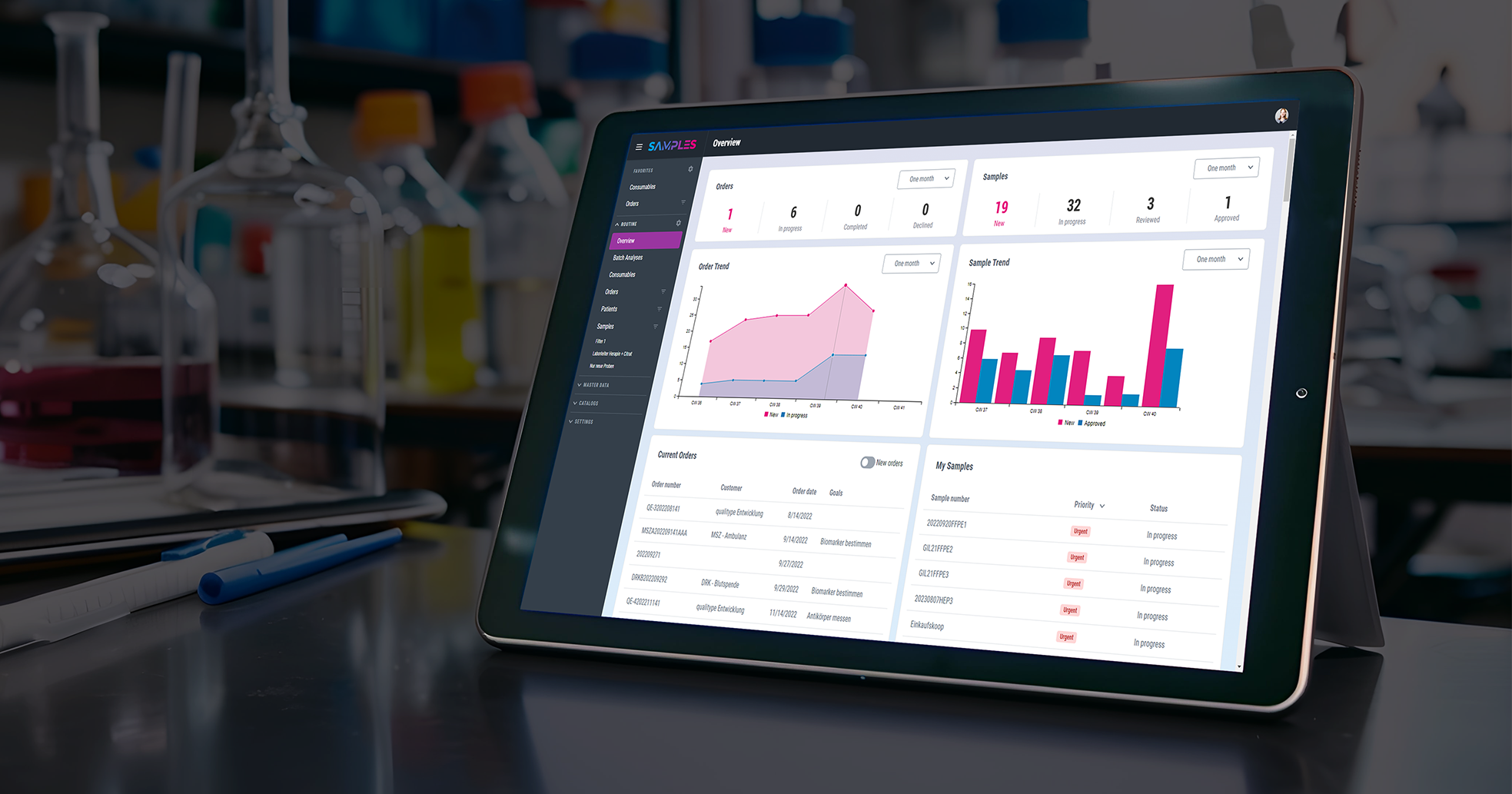
We are convinced that many laboratories are at an essential crossroads. If we look at other sectors, such as industrial production, for example, developments in Industry 4.0, digital twins and machine learning have already taken us in a new direction years ago. At the heart of such concepts and strategies is the diverse field of increasing efficiency through digitalization. Laboratories are also facing similar challenges, as the demands placed on them are constantly increasing. Here too, the key to the laboratory of the future lies in digitalization: it is all about maximum performance and connectivity.
The current challenges
Based on the experience gained from the coronavirus pandemic and taking into account current developments and regulatory changes, we have identified the most pressing challenges in the laboratory environment and developed solutions together with our partners medicalvalues GmbH and Consileon Business Consultancy GmbH as well as the leading international healthcare cluster Medical Valley EMN e. V.. The focus is on untapped innovation potential and the resulting suggestions for new structures and workflows on the way to the laboratory of the future.
As laboratories operate in a rapidly changing environment with increasing price pressure, constant adjustments are necessary to remain competitive. These range from the basic range of services to ongoing internal process optimization and innovations in the system landscape. In the case of comparable challenges, approaches such as cross-laboratory collaboration or, if applicable, the use of cross-location planning and control options are also possible. However, both require a minimum level of common standards.
At the same time, it is important to meet the expectations of the diverse customer groups to be served, some of whose demands and requirements have changed significantly in recent years. For example, patients increasingly expect access to digital data with low entry barriers and a high level of transparency. For doctors, data exchange with existing applications is becoming increasingly important. And even though it is often underestimated, the user experience is playing an increasingly important role for everyone – especially for the acceptance of digital solutions.
And this is precisely one of the decisive factors when it comes to finding answers to the widespread shortage of skilled workers in this sector. Having to deploy the urgently needed skilled personnel for monotonous routine tasks instead of automating them can become a long-term obstacle. Increasingly attractive jobs with a clear focus on technically challenging activities are expected.
But even for laboratories that have already digitized a large part of their processes and rely on device integration and automation, two fundamental challenges are coming into focus in the ongoing optimization of process control: data availability and data sovereignty. Both are crucial – especially when it comes to using modern technologies and methods for forward-looking solutions with artificial intelligence, process mining or DataOps, for example.
Decisive innovation potential
At the same time, however, the challenges mentioned also represent potential for innovation on the way to the competitive and resilient laboratory of the future. Probably the most obvious potential lies in the process optimization just described, as a high degree of automation of procedures saves costs, frees specialists from tedious routine activities and enables forward-looking planning and timing of processes. However, it is important to be as independent of manufacturers as possible and to use standardized protocols and interfaces in order to guarantee the necessary data availability and data sovereignty in the long term.
The second major innovation potential follows on seamlessly from the one just mentioned: The modularization and agility of the system landscape is crucial to ensure the essential ability of laboratories to change and adapt. Instead of mammoth projects and large overall solutions, implementation in manageable steps and a system landscape with many smaller, very well networked special systems are more effective. This gives the laboratory the opportunity to react appropriately to current developments and implement the best solution in each case.
The third identified innovation potential lies in internal organizational development and employee retention. Laboratories with a high degree of digitalization and automation can position themselves much better as attractive employers – provided that employees receive appropriate support during the transformation processes. Due to the changing requirements in relation to customer groups, the “healthcare service provider” business model for private individuals with the corresponding processing of digital data was also identified.
The modern LIMS as an enabler
So what role do laboratory information and management systems (LIMS) play on the road to Laboratory 4.0? The best way to answer this question is to take a look at the definition: A LIMS is generally understood to be an IT application that supports laboratory operations in sample processing and management as well as the associated workflows. In short, this means that the LIMS and its nature are of central importance in this question, as a LIMS relates to the entire laboratory operation and almost all potential process optimizations – from the receipt of orders, the organization of samples and their analysis or data acquisition to the evaluation and preparation of results.
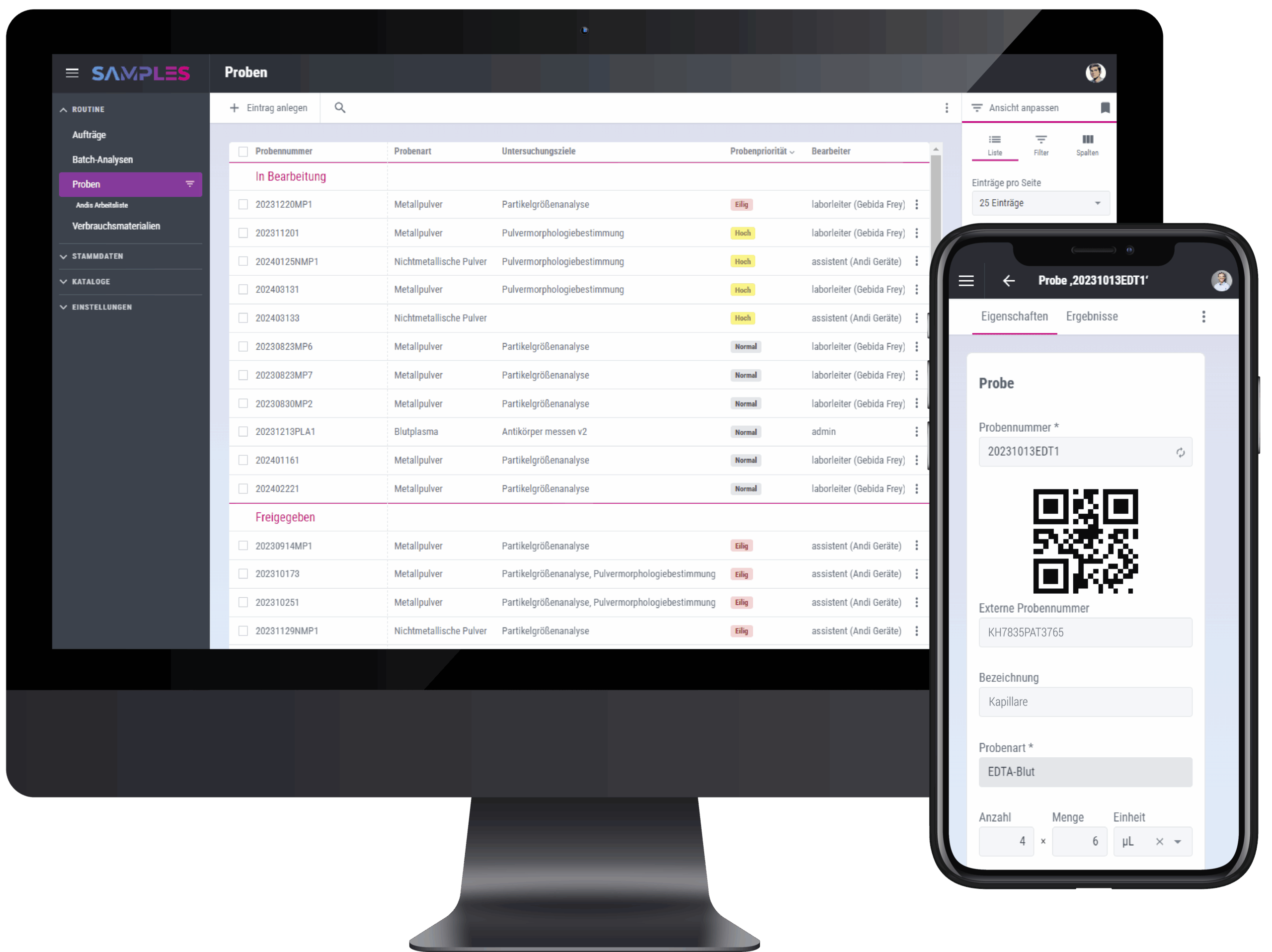
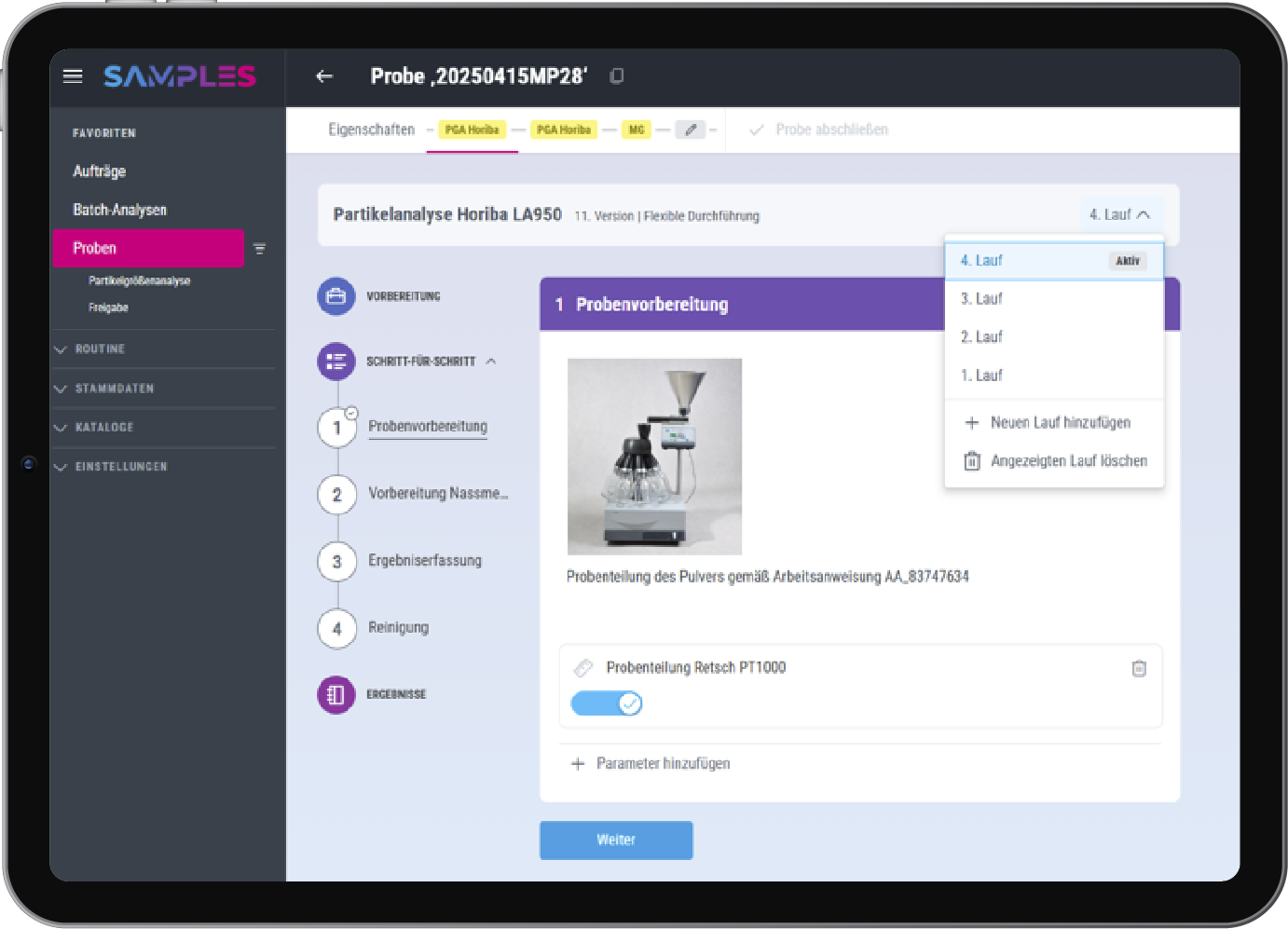
In view of the innovation potential identified, this also results in specific requirements for a LIMS. First, we want to focus on the topics of usability and user experience, i.e. the acceptance of digital solutions by laboratory staff and the attractiveness of the laboratory as an employer: each of us uses mobile applications almost every day and increasingly expects a similar “feel” from the software we use professionally, especially when talking to young employees. A modern LIMS should meet these requirements in terms of usability and user experience and also offer comprehensive configuration and customization options – ideally by the users themselves.
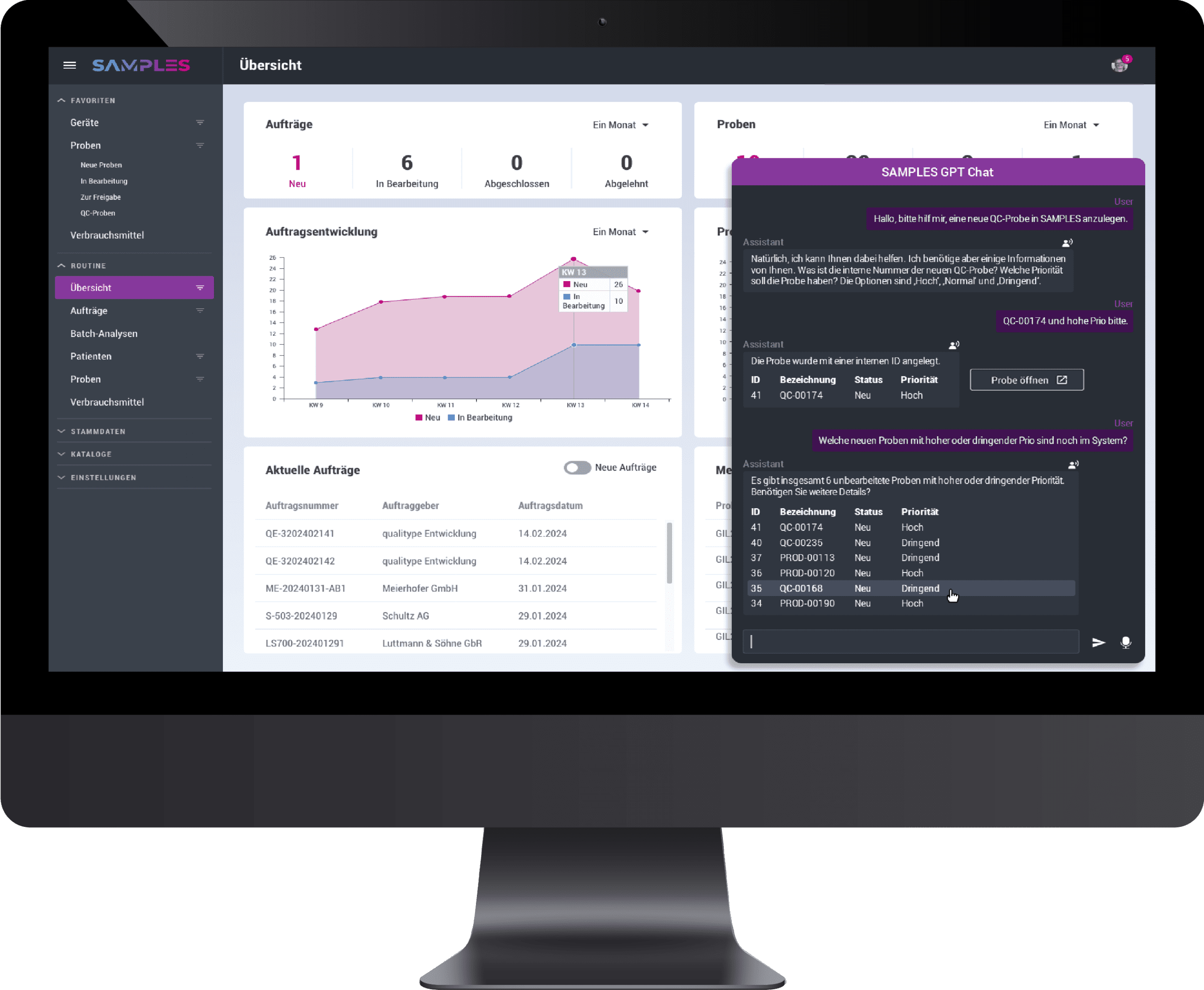
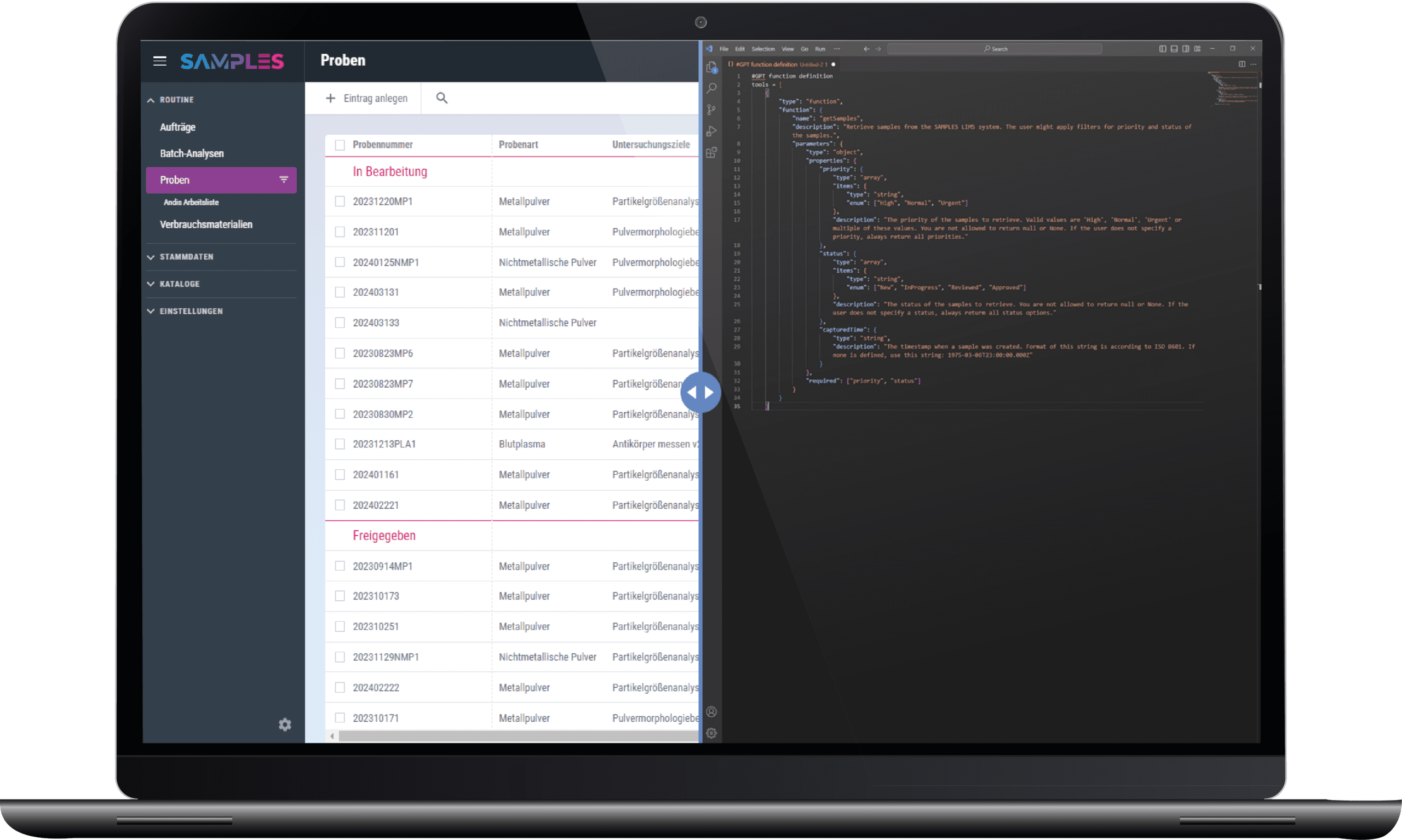
In terms of the system landscape, the LIMS should correspond to the premises of the preferred architecture, i.e. actively support integration, accessibility, exchange and expandability with other components and not hinder them in any way. In conjunction with middleware that acts centrally as a “mediator” or “translator”, the LIMS should fit into the overall architecture as an integral component alongside the distributed components (DMS, SDMS, scheduler, orgware, etc.). The prerequisite for this is an open software architecture of the LIMS, which enables the realization of open, high-performance interfaces for e.g. device integration, connection of external tools and automation as a whole. Ideally, the LIMS should support modern interface standards such as LADS, SiLA-2, AnIML, PAC-ID, T-REX, ADF, HL7, MTP or SDC, as these ensure interoperability, secure data transfer and traceability and, last but not least, simple interchangeability of the devices and software elements used in the laboratory. Under these conditions, the LIMS acts as a central link in the laboratory of the future, with which the user can manage, orchestrate and control a large number of processes. Such a LIMS guarantees maximum future-proof performance and connectivity – right up to the use of solutions with artificial intelligence. In addition to AI applications for pattern recognition and image processing, for example, it is also possible to integrate an AI chat in the LIMS in order to expand the user’s interaction options with the system, speed up the search for required content and increase overall efficiency. The desired information can then be retrieved from the LIMS using the AI chat via the interface or even actions can be carried out directly via the application, such as the creation of new samples in the LIMS.